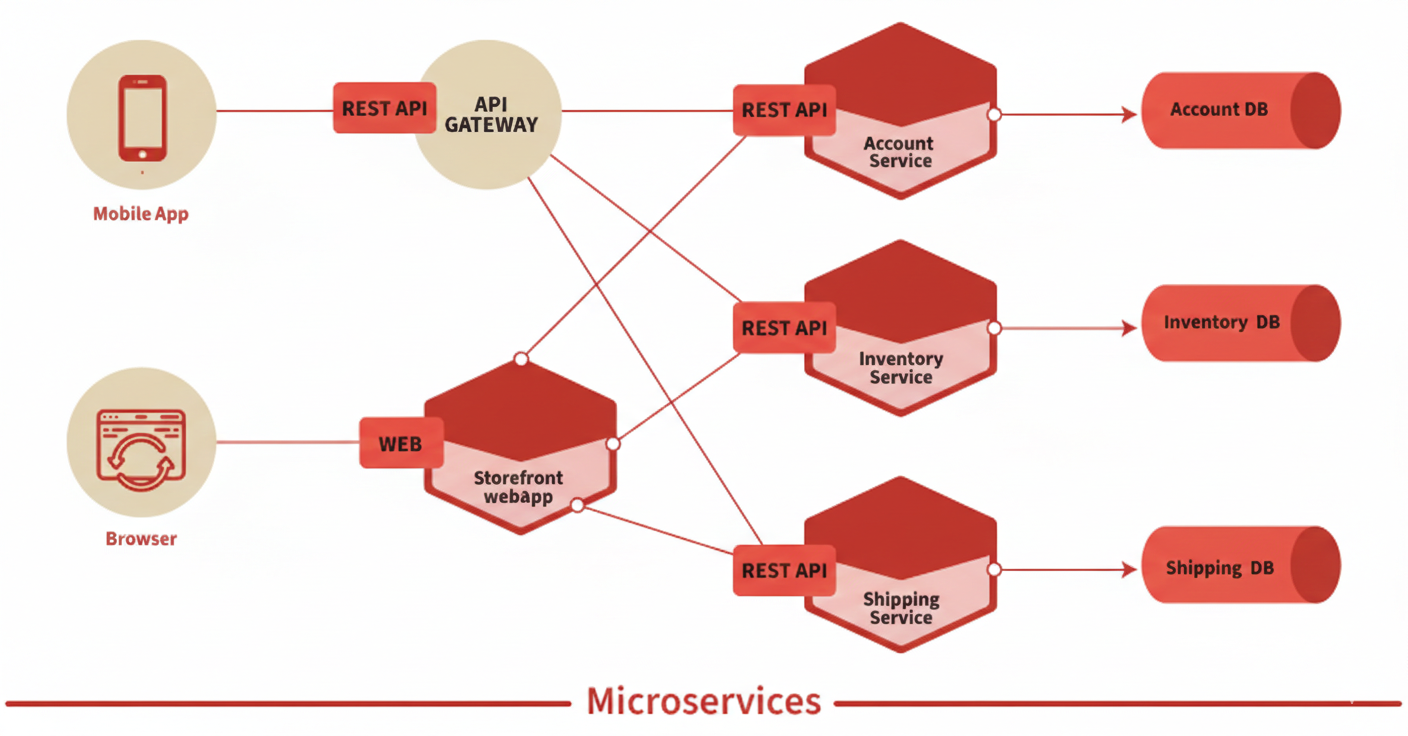
Microservices Architecture Explained
Microservices are an architectural style for building applications as small, independent services that communicate over APIs. This guide explains microservices concepts, benefits, characteristics, and how they work in modern software systems.
Introduction to Microservices
Unlike traditional monolithic applications, microservices break down an application into smaller, autonomous services. Each service focuses on a specific business capability, making development, deployment, and scaling more efficient.
Key Characteristics of Microservices
Performs One Specific Function
Each service focuses on a single business capability.
Independent Development & Deployment
Services can be developed, deployed, and scaled independently.
Technology Flexibility
Each service can use different programming languages or frameworks.
Self-Contained
Each microservice is like a mini-application on its own.
How Microservices Work
Single Business Feature
Each service handles a single business feature (e.g., user login, payments, products).
API Communication
Services communicate with each other using APIs.
Technology Freedom
Teams can choose the best technology for each service.
Independent Updates
Services can be updated or scaled independently, reducing risk and improving reliability.
Microservices Architecture Diagram