Introduction to Java
1. Definition of Java
- Java is a high-level, object-oriented programming language.
- Developed by Sun Microsystems (now owned by Oracle) in 1995.
- Known for its "write once, run anywhere" capability.
Java Features
• Object-Oriented Programming (OOP):
Java fully supports object-oriented programming.
• Platform Independent:
Java code can run on any system without considering OS.
• Multithreading:
Java allows running multiple tasks concurrently and increases efficiency.
• Standard Libraries and APIs:
Java provides multiple built-in libraries and APIs for programming needs.
• Open-Source Libraries:
Java has a wide range of libraries to extend functionality and speed up development.
What is JDK (Java Development Kit) in Java
Java Development Kit (JDK) is a software development environment developed and distributed by Oracle. It is used for building Java software applications and applets.
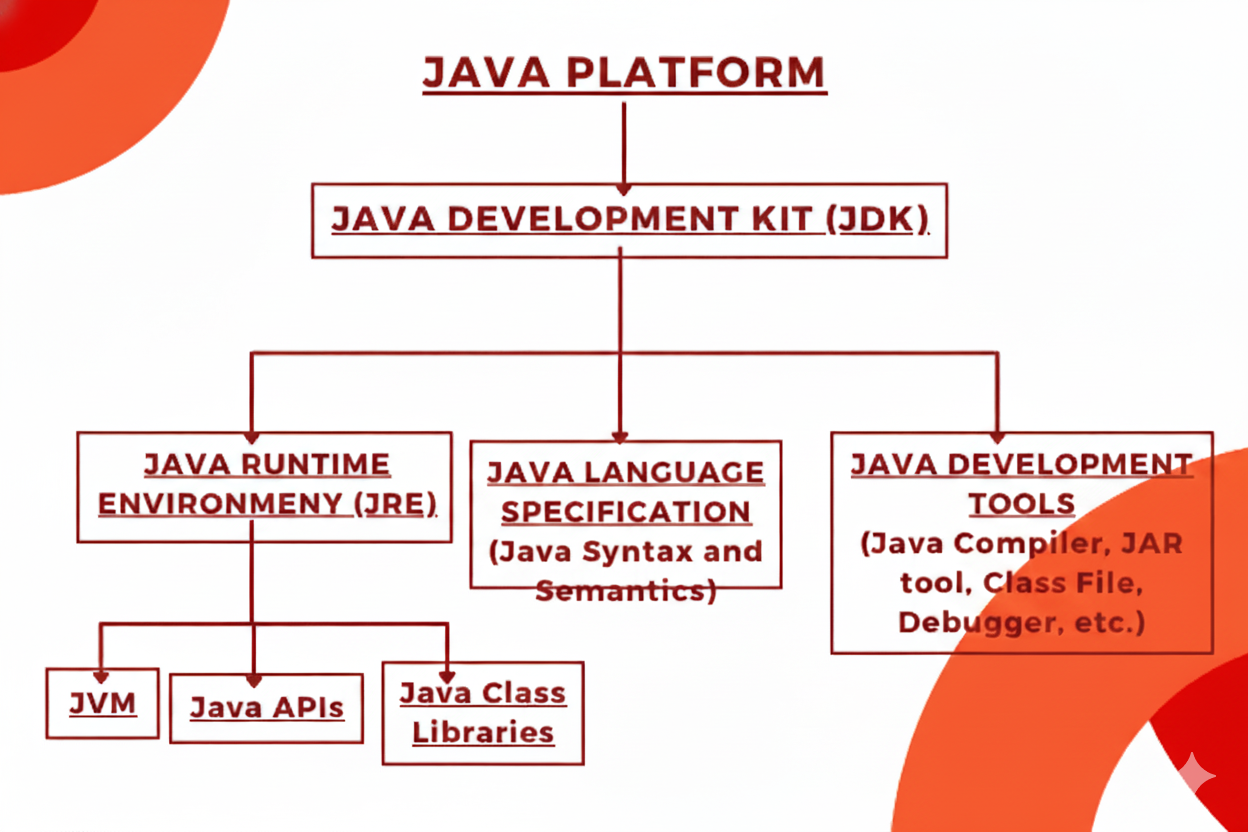
a) Java Runtime Environment (JRE):
Required for running a Java application. JRE cannot be used to develop Java applications; it only executes them.
Java Language Specification:
The technical definition of syntax and semantics of the Java programming language.
Java Development Tools:
Includes Java compiler, JAR tool, debugger, JRE builder, and more. Provides everything for compiling, running, monitoring, debugging, and documenting applications.
How to Run Java Program
- Java is a high-level language.
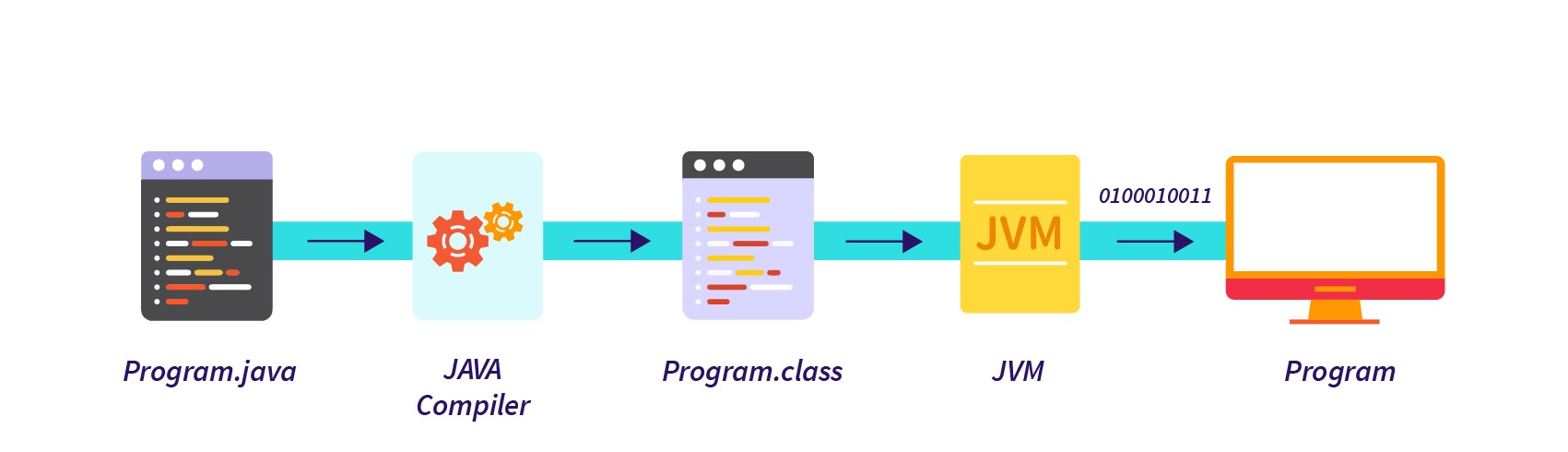
- Java compiler "javac" converts it to byte code (.class file).
- JVM reads byte code, converts it to machine code, and executes the program.
- Java is platform independent because the byte code can run on any JVM. JVM converts byte code to machine code based on OS.